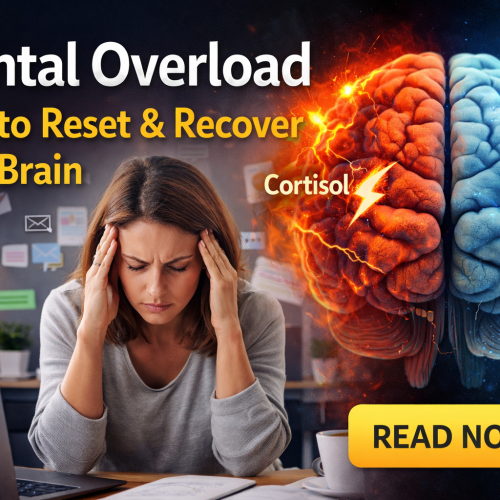
Mental overload is one of the biggest hidden causes of low focus, anxiety, and mental fatigue today.
In today’s hyperconnected world, the human brain is under constant pressure. Notifications, multitasking, and endless streams of information are no longer occasional distractions — they are part of everyday life.
If you feel constantly tired, distracted, or unable to focus, even after resting, you are not alone. Millions of people are experiencing mental overload without realizing it.
While technology has made life more convenient, it has also created a hidden problem: mental overload.
This condition occurs when your brain is exposed to more information and stimulation than it can process efficiently. Over time, this leads to cognitive fatigue, reduced focus, and emotional imbalance.
Many people experience mental overload without even realizing it. They feel tired, distracted, or overwhelmed, but assume it is just part of normal life.
In reality, your brain may be signaling that it needs recovery.
In this article, you will understand the real symptoms of mental overload, what causes it, how it affects your brain, and most importantly, how to reset your mind and regain clarity.
Why Mental Overload Is Increasing in Modern Society
The human brain was not designed to handle the level of stimulation we experience today. For most of human history, information came slowly and was directly connected to survival.
Now, the average person consumes massive amounts of information every day — through social media, emails, notifications, videos, and constant digital interaction.
This continuous input forces the brain into a constant state of alertness, preventing it from entering deeper levels of focus and recovery.
Instead of processing information effectively, your brain starts to filter, skip, and overload.
Over time, this leads to mental fatigue, reduced concentration, and a feeling that your mind is always “busy” but never productive.
What Is Mental Overload (From a Brain Perspective)?
Mental overload occurs when the brain receives more input than it can process efficiently. The prefrontal cortex — responsible for focus, decision-making, and self-control — becomes overwhelmed.
Understanding mental overload is essential for improving overall mental health and emotional balance.
When this happens, your brain shifts from a state of clarity to a state of reaction. Instead of thinking deeply, it begins to operate on impulse and short-term responses.
This is why tasks that once felt simple suddenly feel difficult or exhausting.
Over time, this state reduces cognitive performance and increases emotional instability.
Hidden Symptoms of Mental Overload Most People Ignore
Mental overload is often misunderstood because it doesn’t always feel like traditional stress. In many cases, the symptoms are subtle and gradually become part of your daily life.
Instead of recognizing it as a problem, people normalize the feeling of being constantly tired, distracted, or mentally drained.
Here are the most common — and often ignored — signs:
1. Constant Mental Fatigue
You feel tired even after resting. It’s not physical exhaustion — it’s your brain struggling to recover from continuous stimulation.
2. Difficulty Focusing on Simple Tasks
Tasks that once felt easy now require more effort. Your attention jumps quickly, and staying focused becomes a challenge.
3. Decision Fatigue
Even small decisions feel overwhelming. Your brain avoids choices because it is already overloaded.
4. Increased Irritability
Small problems trigger disproportionate reactions. This happens because your mental capacity is already stretched.
5. Forgetfulness and Mental Fog
You forget things easily or lose track of what you were doing. This is a sign that your brain is not processing information efficiently.
6. Need for Constant Stimulation
You feel uncomfortable in silence and constantly reach for your phone, even without a clear reason.
This is one of the strongest indicators of mental overload.
If you recognize several of these symptoms, your brain is not just tired — it is overloaded and in need of recovery.
The Science Behind Mental Overload and Brain Function

To truly understand mental overload, it’s important to look at what is happening inside your brain.
When you are constantly exposed to information, your brain increases the production of cortisol, the hormone responsible for stress. At the same time, your dopamine system — which controls motivation and reward — becomes less sensitive.
This combination creates a powerful imbalance.
- High cortisol → increased stress and mental fatigue
- Low dopamine sensitivity → reduced motivation and satisfaction
Over time, your brain adapts to this pattern. You start needing more stimulation just to feel normal.
This is why many people develop habits like excessive scrolling, multitasking, or constantly switching between apps.
However, this behavior creates a loop:
- More stimulation → less mental clarity
- Less clarity → more need for stimulation
- More stimulation → deeper mental overload
Additionally, your prefrontal cortex — responsible for focus and decision-making — becomes less efficient under constant pressure.
This reduces your ability to think clearly, solve problems, and maintain emotional control.
Understanding this process is the first step toward reversing it.
The Difference Between Stress and Mental Overload
Although often confused, stress and mental overload are not the same thing.
Stress is usually caused by external pressure, such as deadlines, responsibilities, or challenging situations.
Mental overload, on the other hand, is caused by excessive cognitive input — even if it is not stressful.
You can feel mentally overloaded while doing things you enjoy, like watching videos or browsing social media.
This makes mental overload more difficult to identify and more dangerous over time.
How to Reset Your Brain and Recover from Mental Overload
The good news is that your brain is highly adaptable. Even if you are experiencing mental overload, it is possible to reverse the effects by making intentional changes in your daily routine.
The key is not to do everything at once, but to focus on reducing cognitive pressure and allowing your brain to recover.
1. Reduce Input Before Trying to Increase Focus
Most people try to improve focus without reducing distractions first. This rarely works.
Your brain needs less input, not more discipline. Start by reducing unnecessary notifications, limiting screen time, and avoiding constant multitasking.
2. Practice Cognitive Fasting
Set aside time during your day with zero digital stimulation. No phone, no social media, no content.
This allows your brain to reset and return to a more balanced state.
3. Rebuild Deep Focus Gradually
Instead of forcing long periods of concentration, start small. Focus for 15–25 minutes without interruptions, then take a break.
Over time, your brain will regain its ability to concentrate deeply.
4. Improve Sleep Quality
Sleep is essential for cognitive recovery. Without proper rest, your brain cannot process information or regulate emotions effectively.
5. Use Structured Methods to Calm Your Mind
One of the most effective ways to reduce mental overload is by using structured methods designed to calm your nervous system.
Instead of random content, these methods guide your brain into a state of relaxation and clarity.
Most people try to fix mental overload in the wrong way, focusing only on productivity. But the real solution involves understanding how your brain processes stimulation and recovery.
👉 Learn the complete step-by-step method to reduce mental overload and regain focus
Daily Habits That Help Prevent Mental Overload
Recovering from mental overload is important, but preventing it is even more powerful. Small daily habits can significantly reduce cognitive stress and help your brain stay balanced.
1. Start Your Day Without Immediate Digital Input
One of the worst habits for your brain is checking your phone immediately after waking up. This floods your mind with information before it has time to stabilize.
Instead, give yourself at least 20–30 minutes without digital stimulation.
2. Limit Social Media Consumption
Social media is one of the main sources of mental overload. The constant flow of short, fast, and stimulating content keeps your brain in a reactive state.
Set clear limits for usage and avoid endless scrolling.
3. Take Intentional Breaks Between Tasks
Your brain needs pauses to process information. Without breaks, mental fatigue accumulates quickly.
Even short pauses of 5 minutes can improve clarity and performance.
4. Create Low-Stimulation Moments
Spending time in silence or calm environments allows your brain to recover naturally.
This can include walking, listening to calm music, or simply sitting without distractions.
5. Focus on One Task at a Time
Multitasking is one of the biggest contributors to mental overload. It reduces efficiency and increases cognitive fatigue.
Single-tasking improves both performance and mental clarity.
By applying these habits consistently, you create a mental environment that supports focus, balance, and long-term cognitive health.
When Mental Overload Becomes a Serious Problem
If mental overload is ignored for too long, it can evolve into more serious conditions such as burnout, chronic anxiety, and emotional exhaustion.
Warning signs include:
- Persistent fatigue even after resting
- Loss of motivation
- Emotional instability
- Difficulty handling daily responsibilities
If these symptoms become frequent, it’s a clear signal that your brain needs immediate recovery and lifestyle changes.
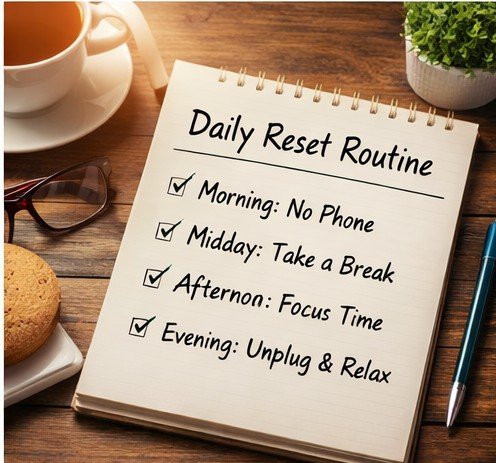
Practical Example: A Simple Daily Reset Routine
Understanding mental overload is important, but applying simple strategies in your daily life is what truly makes a difference.
Here is a practical routine you can start using today to reduce mental overload:
- Morning: avoid checking your phone for the first 30 minutes after waking up
- Midday: take a 5–10 minute break without screens
- Afternoon: work in focused intervals (15–25 minutes)
- Evening: reduce digital exposure at least 1 hour before sleep
This simple structure helps your brain reduce stimulation and recover naturally throughout the day.
Consistency is more important than intensity. Small changes repeated daily create long-term mental clarity.
Frequently Asked Questions About Mental Overload
Can mental overload cause anxiety?
Yes. Mental overload increases stress levels and can lead to anxiety symptoms over time, especially when the brain does not have enough time to recover.
How long does it take to recover from mental overload?
This depends on the level of overload. Some people feel better within a few days of reducing stimulation, while others may need weeks of consistent habit changes.
Is mental overload the same as burnout?
No. Mental overload is usually an earlier stage. If ignored for too long, it can develop into burnout.
Can reducing screen time really help?
Yes. Reducing screen time lowers cognitive input and allows your brain to reset, improving focus and emotional balance.
What is the fastest way to feel better?
The fastest improvement usually comes from reducing stimulation, improving sleep, and creating short periods of mental rest during the day.
Final Thoughts: Your Brain Was Not Designed for Constant Stimulation
Mental overload is not a personal failure — it is a natural response to an environment filled with constant stimulation.
Throughout this article, you’ve seen how excessive input affects your brain, reduces focus, and impacts your emotional balance.
You’ve also learned that recovery doesn’t require drastic changes — it starts with small, consistent actions.
By reducing unnecessary input, creating moments of mental rest, and applying simple daily habits, you can gradually restore your clarity and cognitive energy.
Your brain is adaptable. With the right approach, it can recover, reorganize, and perform at a much higher level.
Your brain is not failing — it is overloaded.
If you want to take control of your mental energy and build a healthier mind, the next step is understanding the full system behind it.
If you want to go deeper and build a long-term strategy to improve your mental health and emotional well-being, this complete guide will help you take the next step:
👉 Read the full guide to improving mental health and emotional balance
Start small, stay consistent, and give your mind the space it needs to function at its best.